

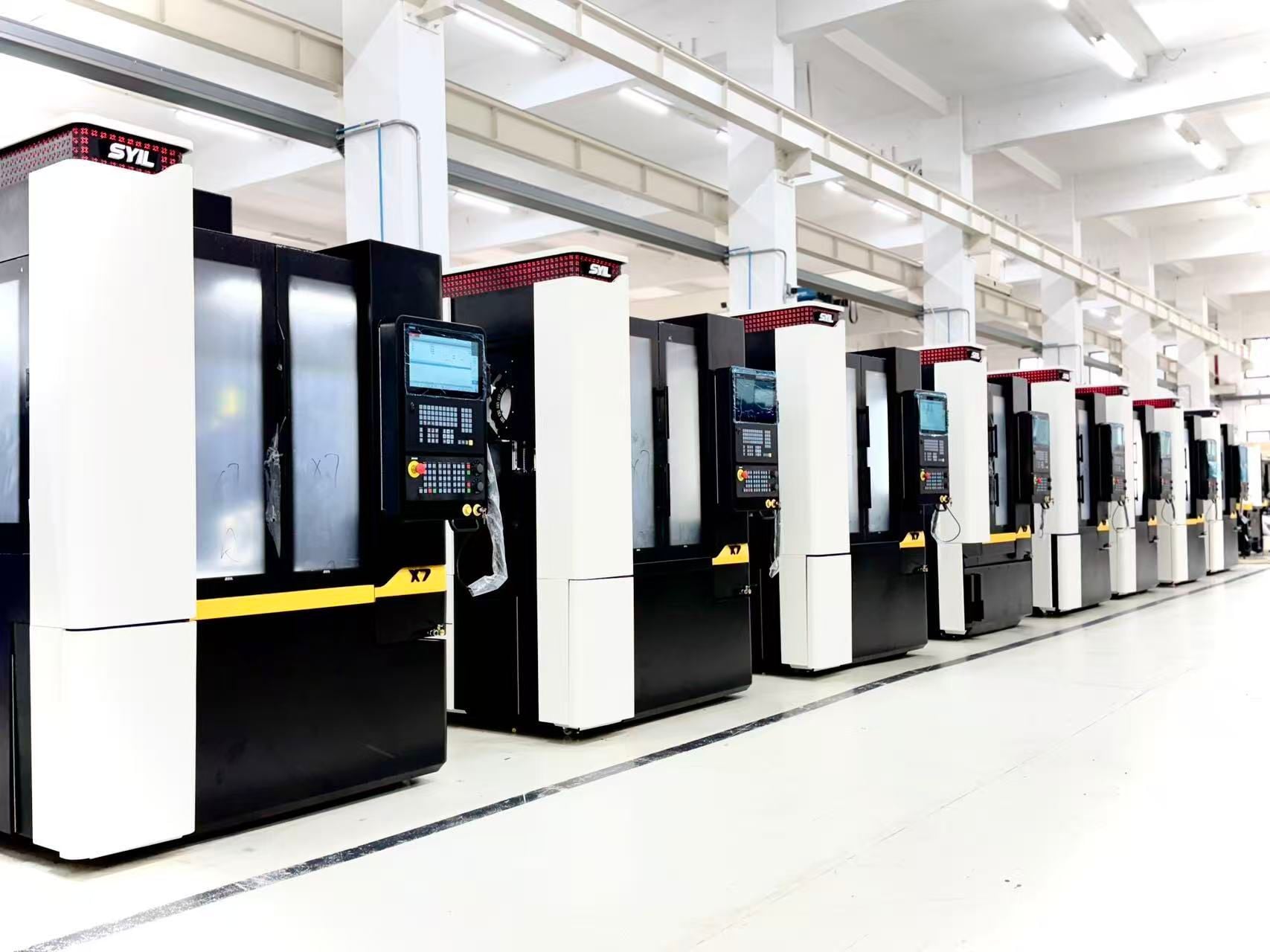
Buying a small CNC milling machine is one of the biggest decisions a growing job shop makes. The right machine brings work back in-house and keeps running for years. The wrong one takes up floor space and holds the shop back. This guide walks through what to check before you compare brochures, puts the SYIL X5, X7 and X9 side by side, and covers what changes when you step up from a desktop machine.
Start with your parts, not the spec sheet
Before you look at any machine, collect the parts you expect to run in the next one to two years. Pick a few real examples:
- the largest part you will clamp, including the vise or fixture
- the deepest feature you need to reach
- the material you cut most often
- your typical batch size, from one-off jobs to repeat runs
These parts are your shopping list. Everything below is measured against them.
What to check on a small CNC milling machine
Work envelope: travel, table and clearance
Axis travel is the first number buyers compare, but it isn't the whole picture. Your part sits in a vise or on a fixture plate, and the tool has its own length. Check three things together:
- X, Y and Z travel against your largest part plus its workholding.
- Table size and table load, especially for heavy fixtures or steel blocks.
- Distance from spindle nose to table, so long tools and tall setups still fit.
If a part only just fits on paper, it will be tight in practice. Leave room for the fixture you haven't designed yet.
Spindle taper and speed
A compact machine usually runs BT30 or BT40 tooling.
- BT30 suits smaller tools and higher spindle speeds. It works well for aluminium, plastics and smaller steel parts, and the holders are lighter and less expensive to stock.
- BT40 takes larger tools and heavier cuts. It makes sense when your parts get bigger or your materials get tougher.
Don't choose on top speed alone. Ask how the spindle is driven (direct or belt) and match that to your typical cuts. If you already own tooling, check which taper it uses.
Automatic tool changer
On jobs with many operations, the number of pockets matters. Count the tools a typical part needs, then add the ones you keep loaded all the time: face-milling cutter, spot drill, chamfer tool and probe. A tool changer with room to spare means less swapping between jobs.
The CNC control
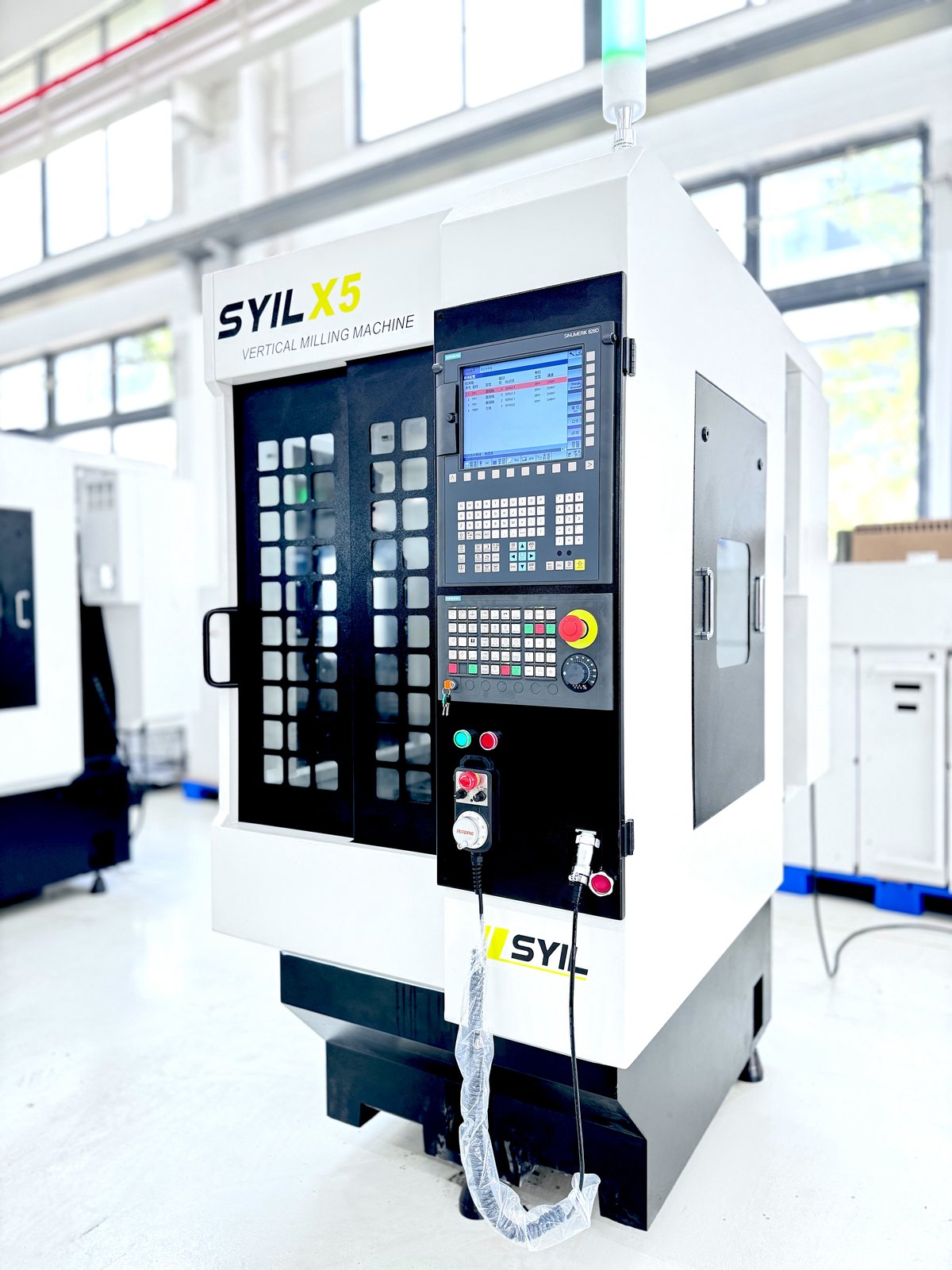
Your operators work with the control every day. A widely used control makes hiring, training and programming easier. The SIEMENS SINUMERIK 828D is used across the industry, so many operators already know it, and training material and CAM post processors are easy to find.
Floor space, power and air
A small footprint CNC milling machine still needs a plan for its place in the shop:
- Footprint and weight. Check door openings, the route into the shop and the floor itself. Leave room to open the doors and electrical cabinet and to clear chips.
- Power. Most machining centers need three-phase power. Confirm the voltage with your dealer before delivery, and whether you need a transformer or phase converter.
- Compressed air. Tool changers and air blast need a steady supply within the machine's required pressure range.
Service, training and support
A machine only earns money when it's running. Ask who installs it, who trains your operators, how fast service responds and where spare parts come from. A local dealer who knows the machine is worth as much as any line on the spec sheet.
SYIL X5 vs X7 vs X9 at a glance
SYIL builds three CNC Vertical Milling Machines for small to medium shops. All three run the SIEMENS SINUMERIK 828D and use a SCHNEEBERGER mineral casting.
| SYIL X5 | SYIL X7 | SYIL X9 | |
|---|---|---|---|
| Travel (X × Y × Z) | 300 × 260 × 300 mm | 400 × 300 × 380 mm | 760 × 500 × 500 mm |
| Spindle taper | BT30 | BT30 | BT40 |
| Spindle | 20,000 rpm, direct drive | 12,000 rpm, belt driven | 10,000 rpm |
| Tool changer | 16 tools | 16 tools, arm type | 24 tools, arm type |
| Best fit | Smaller parts, tight floor space | More Z height and table length on BT30 | Larger parts, heavier fixtures and bigger tools |
How to read it: if most of your parts fit comfortably in the X5's envelope, it gives you the smallest footprint and the highest spindle speed. Choose the X7 when you need more room but want to keep your BT30 tooling. Move to the X9 when bigger parts, heavier fixtures (up to a 500 kg table load) or BT40 tools become regular work.
A 4th-axis rotary table, workpiece probe and tool setter are available as options. Ask your SYIL dealer which options can be fitted later and which are best ordered with the machine.
Stepping up from a desktop machine
Many shops reach for a small CNC milling machine after outgrowing a desktop or benchtop machine. The step up to an industrial machining center changes more than the size of the part:
- Tooling. You move from collets in a small spindle to BT30 or BT40 holders in a tool changer. Budget for holders, a tightening fixture and a starter set of cutters.
- Workholding. Plan on a proper machine vise or fixture plate rather than clamps on an aluminium bed.
- Coolant and chips. An enclosed machine with flood coolant lets you run longer and harder, but you now manage coolant concentration and chip removal every day.
- Installation. Expect three-phase power, compressed air, a solid floor and a rigging plan to get the machine in place.
- Programming. Your CAM system needs a post processor for the SINUMERIK 828D, and your operators need training on the control. Your dealer can help with both.
Plan these before delivery so the new machine isn't left waiting on missing pieces.
Frequently asked questions
What size CNC milling machine does a small job shop need?
Size the machine to your largest realistic part plus its vise or fixture, not the part alone. Many small shops start with a compact machine for most of their work and add a larger one when bigger parts become regular.
Is BT30 or BT40 better for a small CNC milling machine?
BT30 suits smaller tools, higher speeds and lighter parts, and the holders cost less. BT40 suits larger tools and heavier cuts. Choose by your typical part and material.
I'm outgrowing my desktop CNC. What should I look at first?
Start with the parts the desktop machine can't handle, whether that's size, material or run time. Then check travel, spindle taper and tool capacity against those parts, and plan for three-phase power, air and tooling before the machine arrives.
Do I need three-phase power for a CNC Vertical Milling Machine?
Most machining centers run on three-phase power. Check the required voltage with your dealer early. A transformer or phase converter can often bridge the gap.
Should I buy a new or used CNC milling machine?
Used can work if you can see it running and check its history. New gives you a warranty, training and support from day one, which matters most for a first machining center.
Find the right SYIL machine for your shop
Tell us what you make and we'll help you pick the right machine. Request a quote for the X5, X7 or X9, or book a machine demo to see one in action.